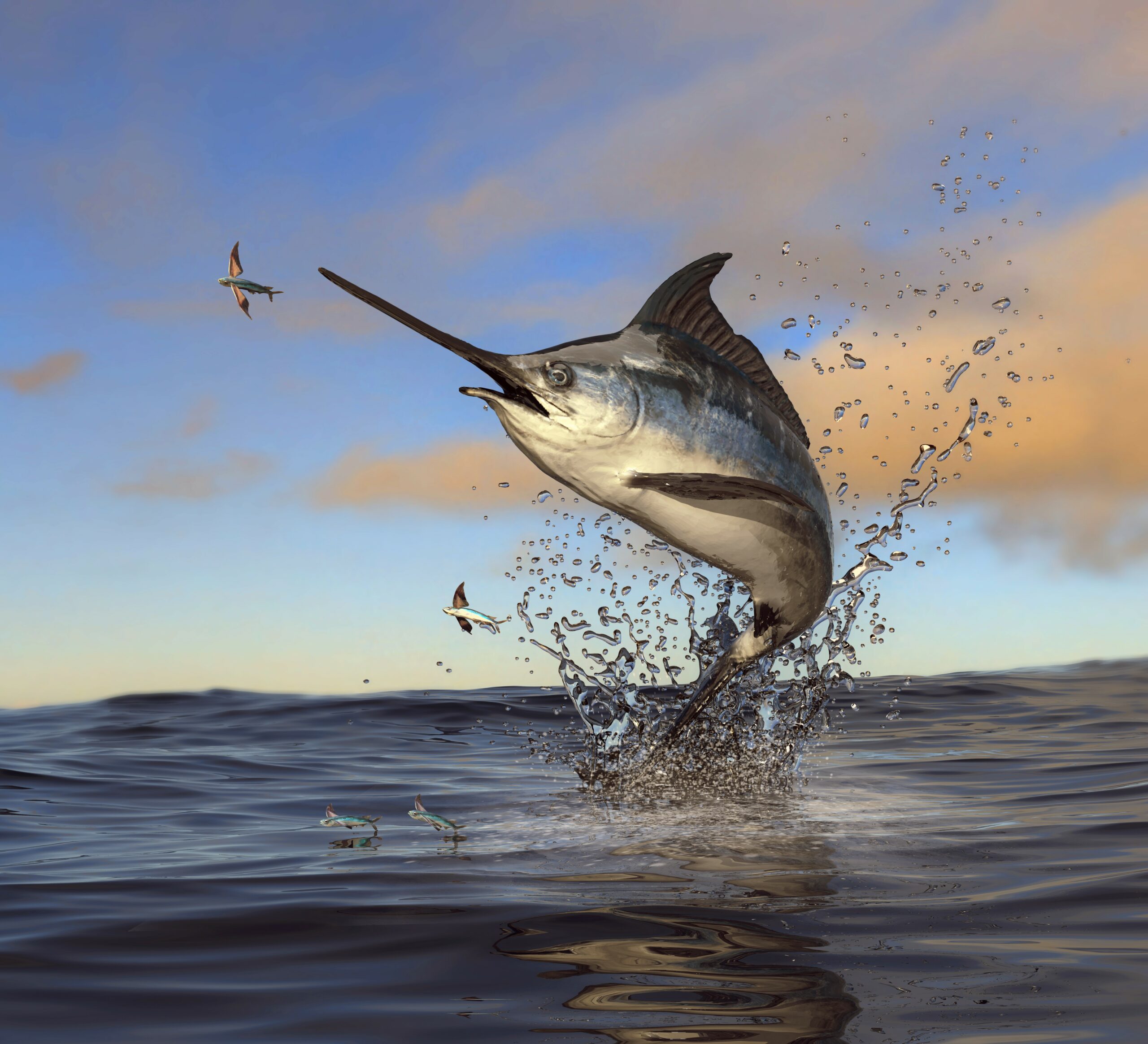

Common Name:
Swordfish
Scientific Name:
Xiphias gladius
Market Name(s):
Broadbill, Emperado

https://fishchoice.com/buying-guide/swordfish
Wild
Impact on Stock
Swordfish are large migratory predators found around the world that grow quickly during their first year of life and have few predators as adults, making them resilient to fishing pressure. North Atlantic swordfish were declared overfished in the late 1990s. In 1999, quotas there were reduced as part of a 10-year plan to help rebuild stocks. In 2013 the population was declared rebuilt at about 14% above its target level, according to NOAA’s FishWatch.
Seafood Watch reports that swordfish populations in the Pacific Ocean appear to be healthy, and overfishing is not occurring there, but FishWatch warned that stock assessments results have been conflicting. In the Indian Ocean southwest region swordfish are below levels needed to produce the maximum sustainable yield, according to a 2014 Seafood Watch Report. Mediterranean swordfish populations have been declining and Seafood Watch considers the most likely scenario from the last assessment is that the population is overfished and slight overfishing is occurring there.
Habitat Impacts
Most swordfish worldwide are caught using longlines, which doesn’t come in contact with the seafloor so it has few impacts on the ocean habitat. Swordfish are also caught with rod and reel, harpoon, handlines, and buoy gear that also have minimal effects.

Bycatch
Longline gear used to catch swordfish can result in high levels of bycatch, including sharks, seabirds, juvenile swordfish, and endangered marine turtles. Shortfin mako sharks, which the International Union for Conservation of Nature categorizes as a vulnerable species, are caught incidentally in the Atlantic swordfish fishery.
To reduce bycatch risks, fishermen in the U.S. Atlantic are required to use circle hooks and longliners in Hawaii operate under strict regulations to protect sea turtles. Rod and reel, harpoon, handlines, and buoy gear also used for catching swordfish result in less bycatch. Despite a 2002 European ban on driftnet gear, some swordfish in the Mediterranean continue to be caught with them.
Management Effectiveness
Given the global distribution of swordfish, multiple groups are responsible for managing the fisheries. The National Marine Fisheries Service and Fisheries and Oceans Canada manage swordfish for the U.S. and Canada in the North Atlantic. Strict management measures there are helping to reduce bycatch and bycatch mortality, according to the FishWatch.
Indian Ocean swordfish fisheries are managed by the Indian Ocean Tuna Commission. Overall Seafood Watch gave management there a red recommendation because of compliance issues with IUU fishing, data reporting to the Commission from individual countries, lack of measures to improve monitoring and no total allowable catch in place.
The Western Pacific Regional Fishery Management Council manages swordfish in Hawaiian waters. Management, which includes scientific research and monitoring, catch limits and permit number limits, is considered effective.
The Inter-American Tropical Tuna Commission (IATTC) and the Western and Central Pacific Fisheries Commission manage swordfish in the Pacific. Measures include annual catch limits, vessel number limits, scientific monitoring, and gear limits. Management in the Western and Central Pacific is considered moderately effective. While the IATTC adopted bycatch management measures in the Eastern Pacific, Seafood Watch reported that many don’t meet best practice requirements and that scientific advice is not always followed when setting measures.